
Finding People Through Hickory Records
Start with the fact already known. A full name can lead to a court party, a registered voter, a deed party, or a licensed professional. An address works best in the parcel search, where the owner name and deed reference can open a longer trail. For a person who died or lived in Hickory decades ago, local obituary, funeral, directory, and cemetery sources often do more than a current web search.
Official sources answer narrow questions. That is useful. A parcel roll names a titled owner, not every person at the home. A court result confirms a party in a case, not that two similar names are the same person. Build the match one record at a time and keep the county, middle name, dates, and address history in view.
The state voter lookup can confirm a public registration profile, precinct, districts, and participation history, but it never reveals ballot choices. Current government and school contacts answer a different need than Hickory’s digitized historical volumes. Compare those sources through the Hickory people directories when the goal is a public office contact, former classmate, or past householder. A telephone or email result from any source still needs a second fact before contact is made.
- Choose Catawba, Burke, or Caldwell County based on the event, parcel, filing, or registration.
- Search the strongest official name or address index and save its exact record number.
- Compare a second source, such as a deed, court docket, voter profile, or directory entry.
- Use the custodian counter, library, mail route, or focused records request when the web result stops short.
- Confirm identity before making respectful contact. A shared name alone is not enough.
Why Hickory County Lines Matter
Most Hickory records are in Catawba County, but the city also reaches into Burke County and has a small Caldwell County portion. A Hickory mailing address therefore does not prove which office holds a deed, court file, marriage license, or voter record. The land county controls property records. The event county controls many vital and court records. A voter’s residence county controls the local election record.
Catawba is the first search for most names and addresses. If an address is near western Hickory, repeat the parcel and deed search in Burke. Use Caldwell when the mapped location points north of the main city area. Newton, Morganton, and Lenoir are the county seats, so a counter visit may lead outside Hickory even though the person used Hickory in a postal address.
Note: Keep the same spelling and date range when repeating a search across counties so a blank result can be compared fairly.
Hickory People Search Offices
North Carolina divides record work among several custodians. The Register of Deeds records land instruments and marriage licenses. The Clerk of Superior Court holds civil, criminal, estate, special-proceeding, and divorce files. Tax and GIS staff maintain the owner and parcel roll. Hickory’s City Clerk keeps municipal records such as Council minutes and ordinances. Full access and copy rules are covered with the Hickory public records system.
Catawba Court Clerk
Justice Center, Newton
Catawba County, NC
828-695-6100
Each office supplies a different kind of proof. Write down the record number, parcel PIN, case number, book and page, or other locator before asking staff for an image or certified copy.
Search Hickory Property Records
The Catawba Real Estate Search accepts an owner name, street number, street name, parcel ID, or map selection. It can connect a legal owner with a tax mailing address, the property’s physical address, a deed reference, assessed values, acreage, and a map. Those fields are strong starting points for a Hickory name or old-address search.
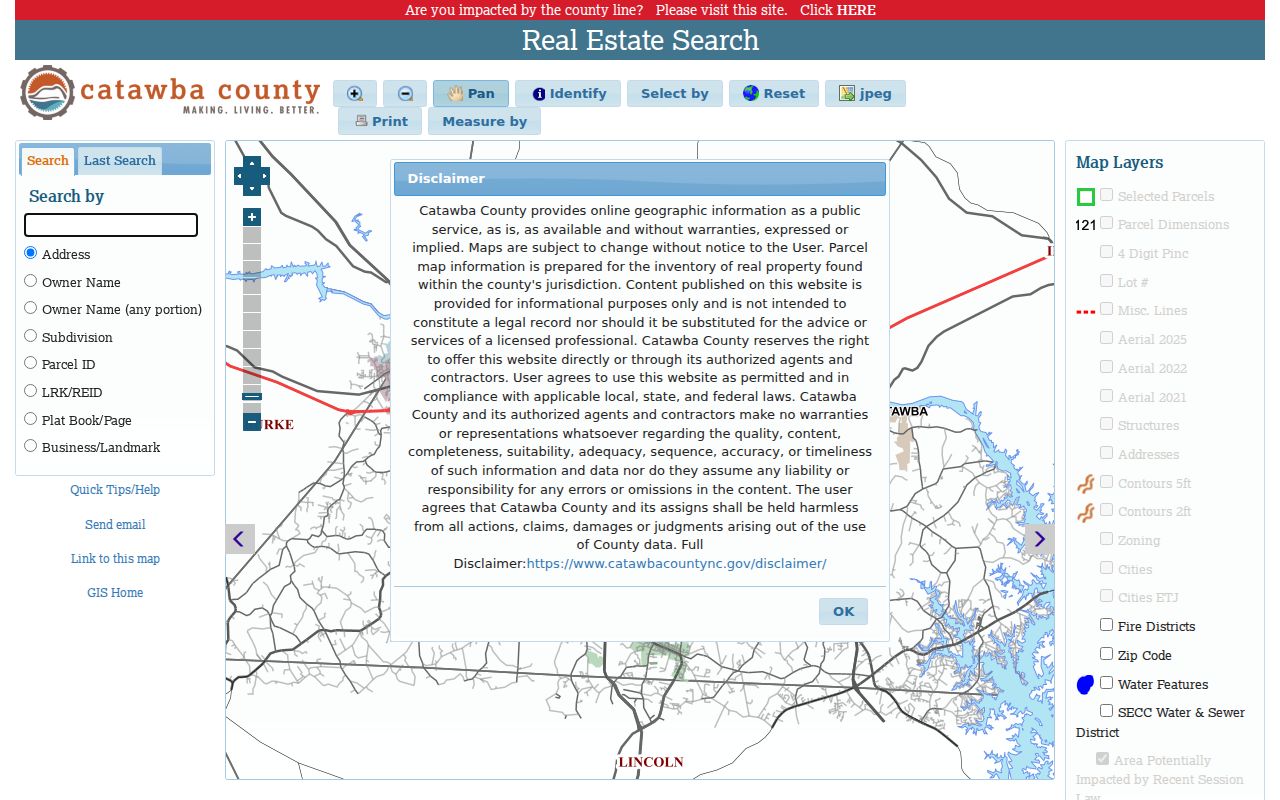
The search form shows why an exact street suffix is not always needed. Try a surname alone first, then add an address field to separate common names. The mailing address and situs address are not the same fact. One tells the tax office where to send mail; the other identifies where the parcel lies.
| Search field | Best use | What to save |
|---|---|---|
| Owner Name | Find current titled owners | Exact owner spelling |
| Street Number and Name | Resolve a known address | Situs address and PIN |
| Parcel ID or PIN | Open one exact parcel | Deed book and page |
| Map selection | Check county and boundary | Parcel shape and jurisdiction |
Note: A parcel mailing address can identify an absentee owner, but it does not show who occupies the Hickory property today.
When Hickory GIS Lags
A recent deed may not appear in the Catawba GIS ownership roll at once. County research notes warn that property data can trail a new deed by three to four weeks. The Register of Deeds is the better source for the newest recorded transfer. Search the deed index by the buyer or seller, then use the parcel roll for the map, tax mailing address, and appraisal data.
This lag is a practical reason to keep both sources open. A deed identifies the grantor, who gives an interest, and the grantee, who receives it. GIS gives the parcel context. Neither proves who lives at the address today. Trusts, estates, business entities, life estates, and absentee owners can all appear as the titled party.
- Grantor and grantee
- The parties giving and receiving an interest in a recorded land instrument.
- Situs address
- The physical location of the parcel, distinct from the owner’s tax mailing address.
- Deed reference
- A book and page or instrument number used to retrieve the recorded document.
Search Hickory Court Records
Hickory cases may be filed in Catawba, Burke, or Caldwell County. The statewide eCourts Portal searches public cases by record number, person name, or business name. The separate North Carolina Court Dates search uses a defendant name or citation number plus the county and date controls.
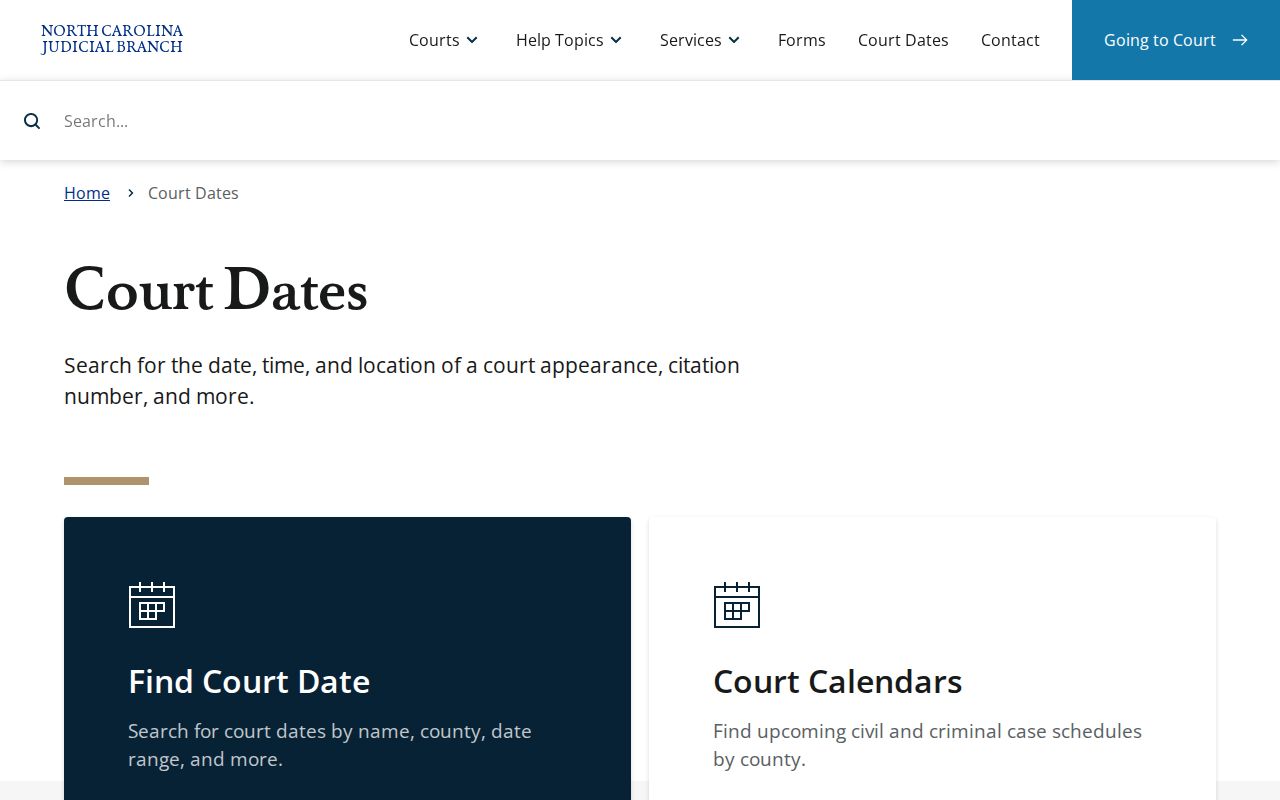
A result can show a case number, court location, type, filing date, party role, event, hearing, and status. Save the case number before judging a match. The public courthouse terminal or Clerk of Superior Court may provide documents that are not remote. Paper and microfilm retrieval remain possible for older matters. Sealed cases, juvenile files, adoption material, and protected identifiers do not become public through a name search.
| Hickory court route | Useful for | Fallback |
|---|---|---|
| eCourts Portal | Public party and case docket search | County clerk terminal or file request |
| Court Dates | Defendant, citation, county, calendar | Local court calendar and clerk |
| Western District of NC | Federal civil and criminal filings | PACER or federal clerk |
Note: Save the exact case number because a common Hickory name can appear in unrelated files across more than one county.
Follow Hickory Vital Records
Birth, death, and marriage records usually begin with the Register of Deeds for the county where the event was registered. Divorce decrees and litigation files come from the Clerk of Superior Court. NC Vital Records is the statewide alternative for registered events, but its certificate product is not the same as a free public name index.
Certified copies require the eligibility and identity proof set by state law. County-filed birth and death certificates have inspection and uncertified-copy rules under G.S. 130A-99, while G.S. 130A-93 limits certified copies and protects specified birth fields. North Carolina does not use a simple rule that all birth records close for one set number of years and all death records for another.
The state reports birth holdings from 1913, death holdings from 1930, marriage records from 1962, and divorce records from 1958. Earlier routes differ. Pre-1930 death research can lead to the State Archives, earlier marriage licenses stay with the county Register of Deeds, and an older divorce decree belongs with the Clerk of Superior Court. Those coverage dates describe state holdings, not the start of every county series.
Catawba’s 2026 change lets many adopted people born in that county request an adoptive birth certificate through the local Register of Deeds, subject to added limits. Sealed adoption files remain restricted. A researcher seeking older family facts can also use the library’s obituary index, funeral records, and county marriage material without treating them as certificates.
Find Hickory Death Records
The Hickory Public Library Genealogy Room preserves two strong local name trails. Its Hickory Daily Record obituary index covers 1915 through 1989. Shuford Funeral Home records cover 1908 through 1957. Their overlap can confirm a date, relative, residence, funeral detail, or cemetery when a civil certificate is hard to obtain.
Patrick Beaver Memorial Library provides the main research room, with in-room materials available during library hours. The collection also includes maps, microfilm, clipping files, family genealogies, church and school histories, yearbooks, and local organization minutes. HeritageQuest is available through NC LIVE; Ancestry Library Edition is used inside the library.
The Cemetery Sexton keeps official lot records for Hickory’s city cemeteries. Call the cemetery office with a full name, approximate death date, and possible family plot when no official public interment portal answers the question. An obituary points to published text. A funeral record can add family and burial details. The sexton record is the stronger source for the grave’s official placement.
Note: Library indexes support family research, but a county or state certificate remains the official event record.
Hickory Corrections Search Channels
Custody and offender tools cover different systems. Catawba County’s jail information concerns current county custody. The NC Department of Adult Correction search covers state prison, probation, and related public correction records. Its form allows an offender number, last and first name, gender, race, ethnic group, birth date, and age range.
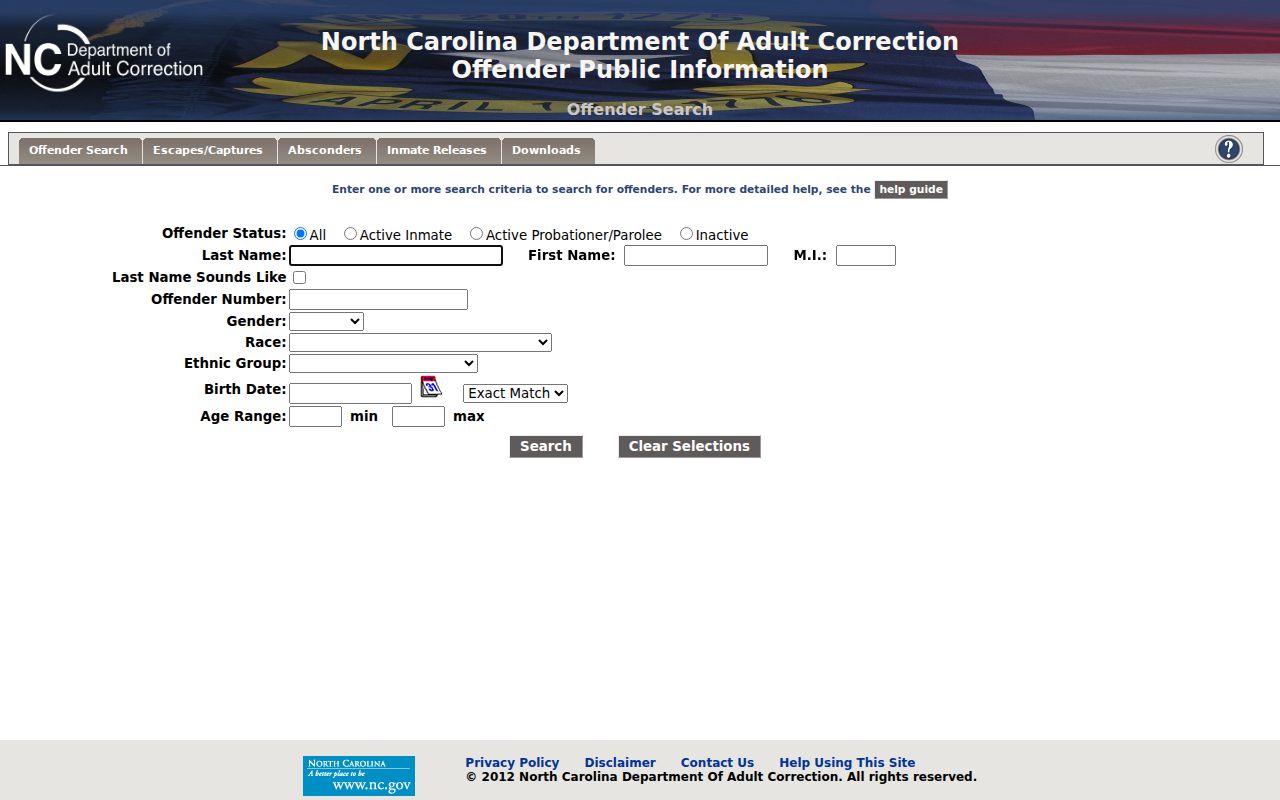
The state result is not a list of every arrest or a replacement for a county court file. Confirm a current status with the agency that holds the person. The NC Sex Offender and Public Protection Registry is another distinct statutory source. It supports name and geographic searches for people required to register.
The official registry displays its search modes and agency warnings before a user reviews a match.
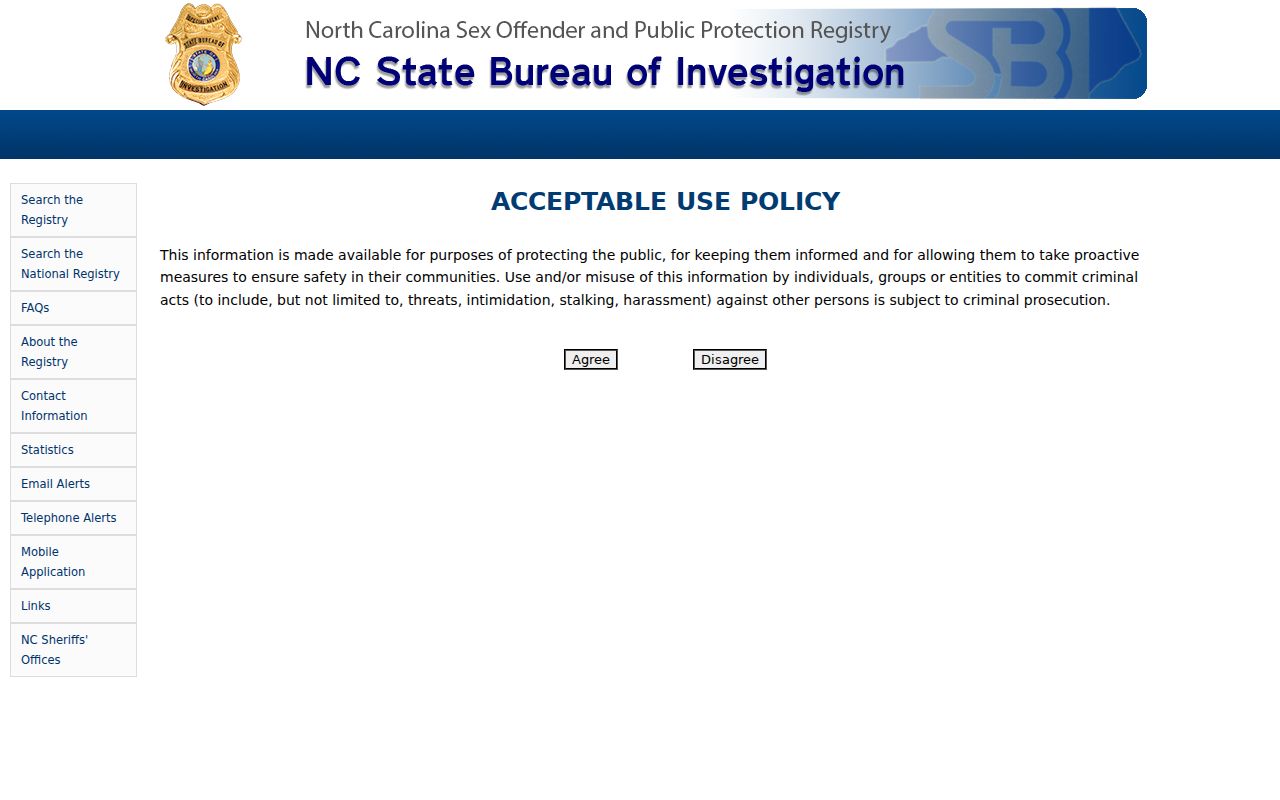
Registry information may include identity, aliases, a photograph, physical description, registration address, offense summary, and compliance details. Use it only for lawful personal safety. Never threaten, target, or harass a listed person.
Verify Hickory Business Records
North Carolina does not have one complete professional directory. The Secretary of State business search can show an entity’s name, status, registered agent, address, formation facts, and filings. Separate boards verify medical, nursing, legal, contractor, real estate, cosmetic art, and educator credentials. Catawba’s Register of Deeds also keeps assumed-name filings.
These sources help verify a seller, identify the public contact tied to an entity, or distinguish two people with the same name. They do not prove that an agent lives at a listed address or that an entity owns a storefront. Board results commonly show a license number and status, with issue, expiration, or public discipline where that board publishes it.
| Official search | Identity evidence | Key limit |
|---|---|---|
| Secretary of State | Entity, agent, formation, filings | Not proof of residence |
| Board verification | License name, number, status | Each board has its own fields |
| Assumed names | Business name filing and parties | County filing, not all state entities |
Hickory Unclaimed Property Search
The official NC Cash name search can surface unclaimed property reported to North Carolina. A result may link an owner name with the reporting holder and can support a past-address or relationship trail during family or estate research. The state’s search and claim process is free.
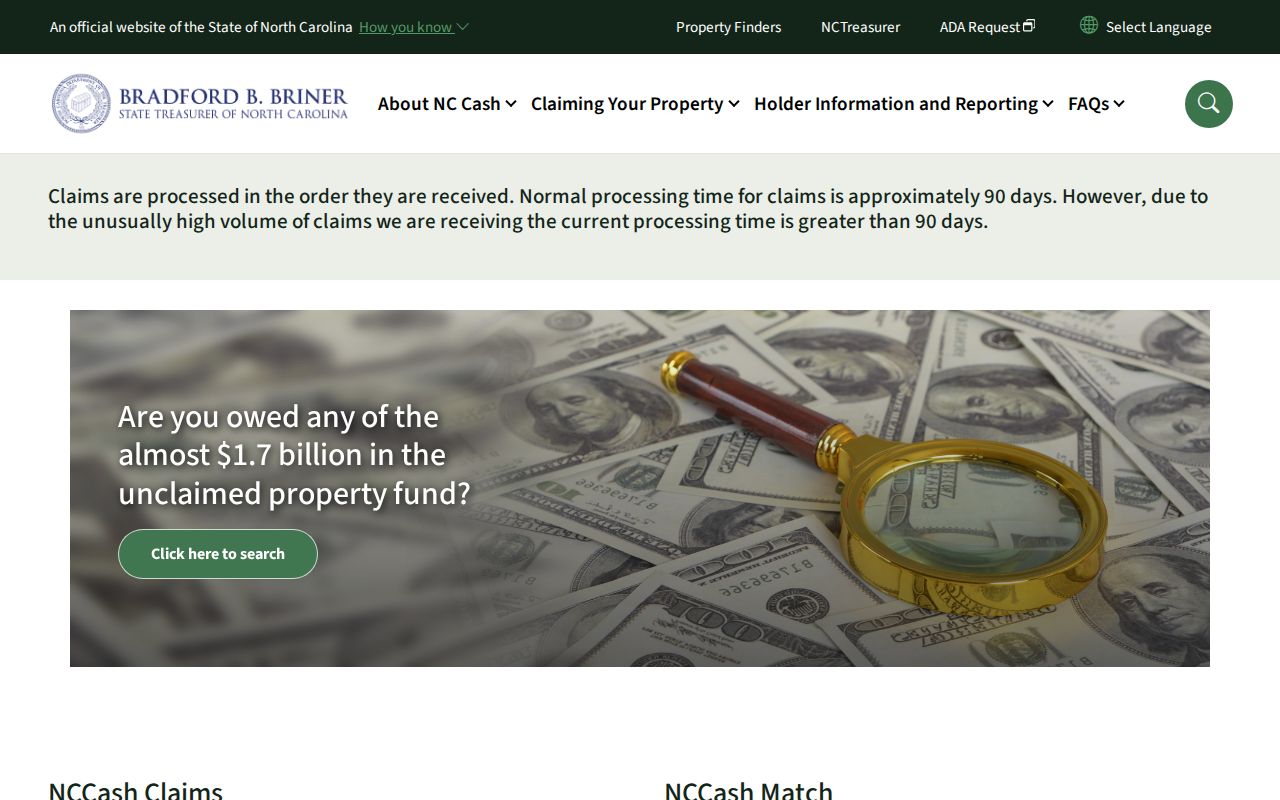
Use name variants and compare any result with known facts before starting a claim. A similar name is not enough. The state will require proof during the claim process. Be wary of a paid pitch that suggests the money cannot be found without a private intermediary.
Trace Old Hickory Addresses
Hickory’s street directions matter. NE, NW, SE, and SW can separate different places with similar street names. Copy the official form exactly because a direction may be a prefix, a quadrant suffix, or part of a highway name. The parcel’s legal description remains useful even when a street label changes.
Old city directories add another issue. Highland and West Hickory joined the city in 1931, so earlier sources may list them apart from Hickory. DigitalNC has ten verified, noncontinuous directory editions from 1920–21 through 1949–50. The 1920–21 book covers “greater Hickory,” including West Hickory, Brookford, Highland, Long View, Oakland Heights, and Windy City.
Modern address points add map precision but do not erase the older naming problem. Catawba coordinated an Address Points layer in 2010 so one parcel could carry more than one structure address. The data support property search, emergency response, and the school locator. Municipalities assign addresses inside their planning areas, while the county performs that work elsewhere. A structure point, postal city, and legal parcel boundary can therefore answer three different questions.
Reverse sections in the 1925–26, 1928–29, and 1935 volumes let a reader start with a street and number, then find the listed householder. Pair that name with the deed and tax roll. A directory suggests an occupant during its canvass period, while the public land record identifies the titled owner.
Note: Verified digitized directory coverage is not continuous, so a missing year should never be treated as a missing resident.
Protected Hickory Search Data
Open access has firm limits. North Carolina keeps voter dates of birth, Social Security numbers, driver license numbers, registration-agency identity, email addresses, voter ID images, and other listed identifiers confidential. Individual ballot choices are secret. Juvenile, adoption, sealed, and expunged court matters are restricted. DMV personal data cannot be reached by using a general records request.
The Address Confidentiality Program gives qualifying survivors a substitute address and mail forwarding through the Attorney General. Election officials protect the real address of enrolled voters. A public search must never be used to defeat that protection. Government and financial identifiers that remain in a public document image may be eligible for a signed, no-fee redaction request under G.S. 132-1.10.
Use records with care. North Carolina law prohibits stalking, cyberstalking, and unauthorized disclosure of protected addresses. Verify a match and respect any sign that contact is unwanted.
Commercial data products can be stale, merged, or incomplete. Official records are also snapshots, but each has a named custodian and a defined purpose. Compare two independent sources before relying on a result, and ask the custodian for correction or certification when the distinction matters.